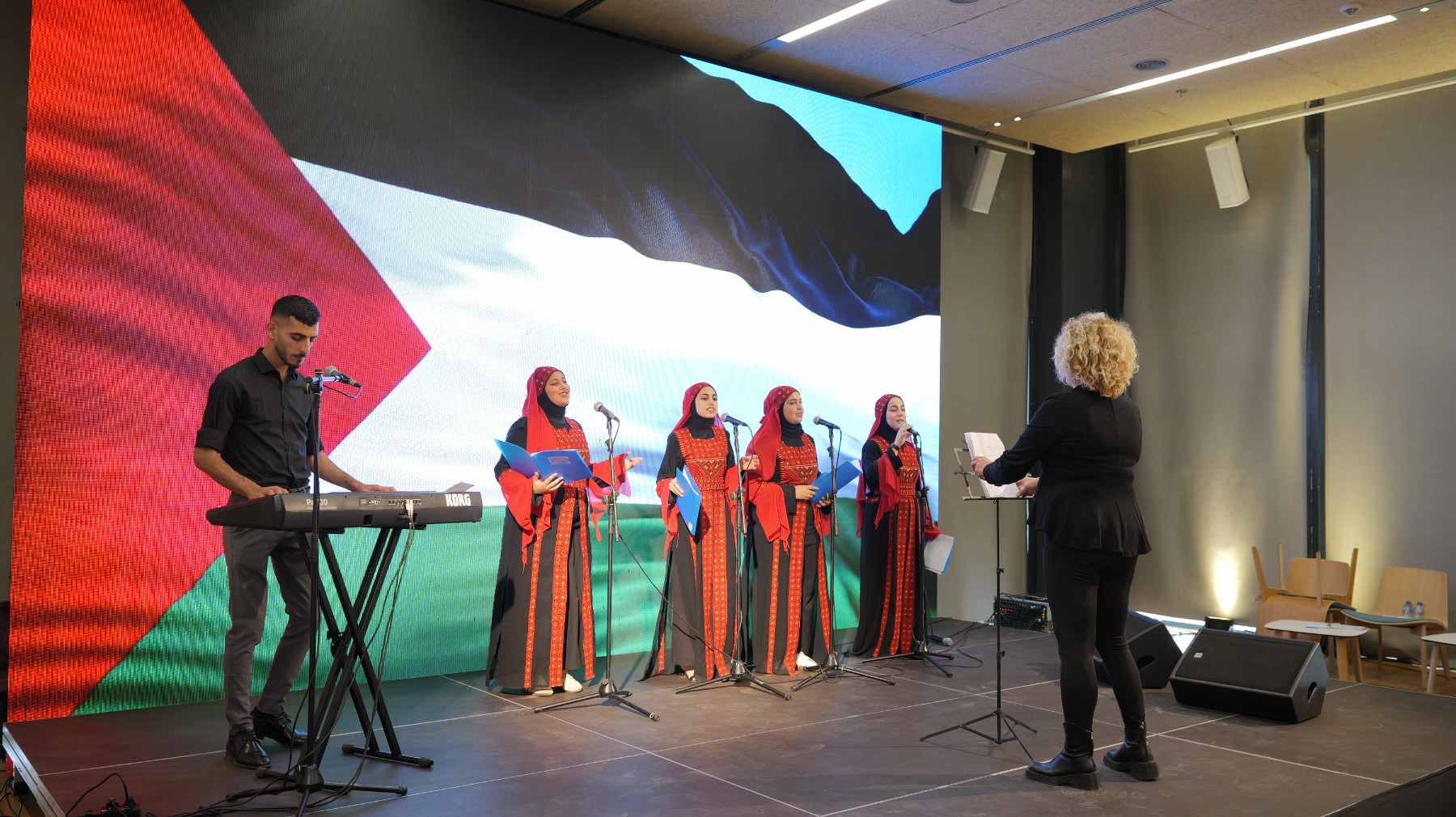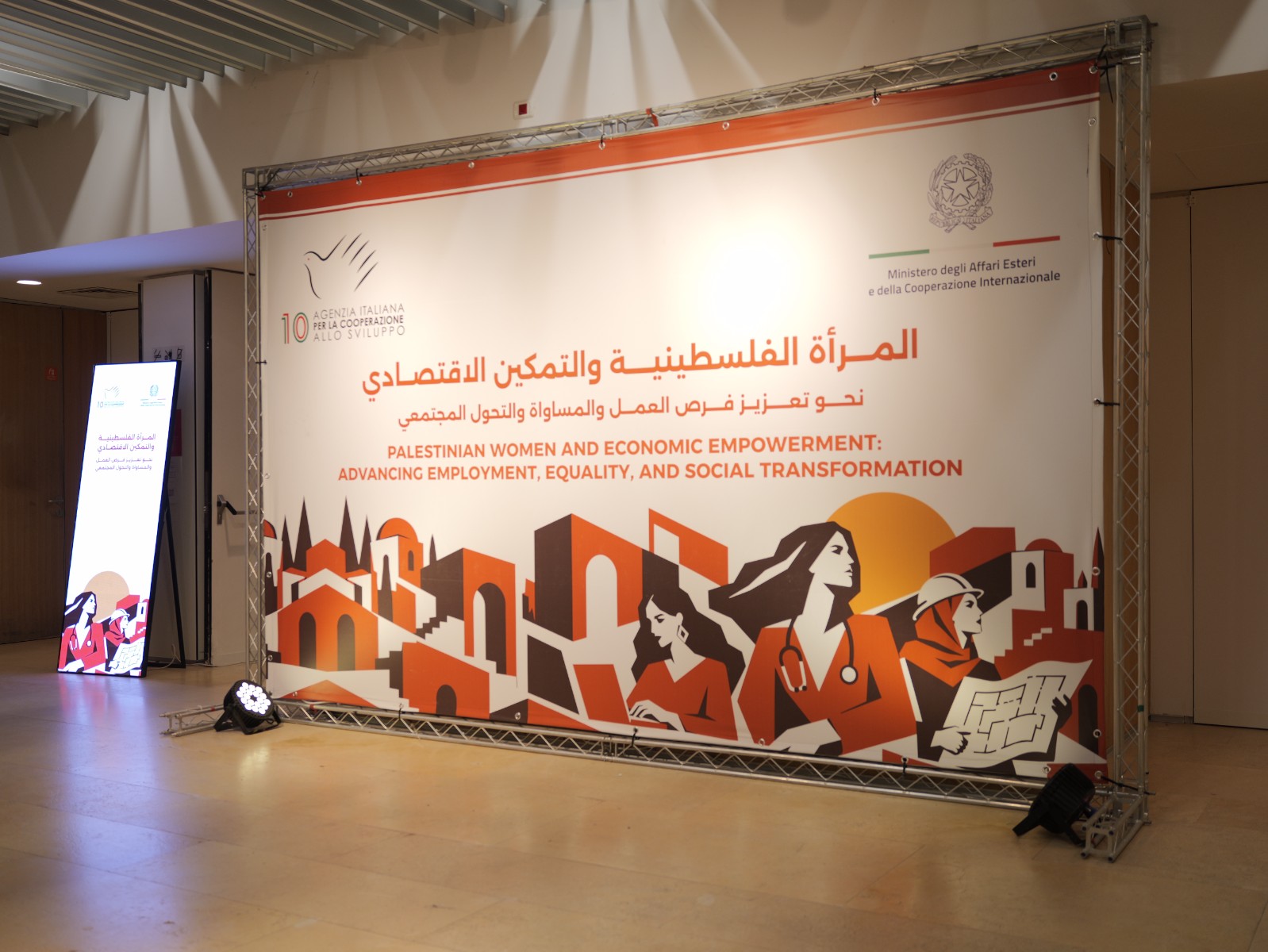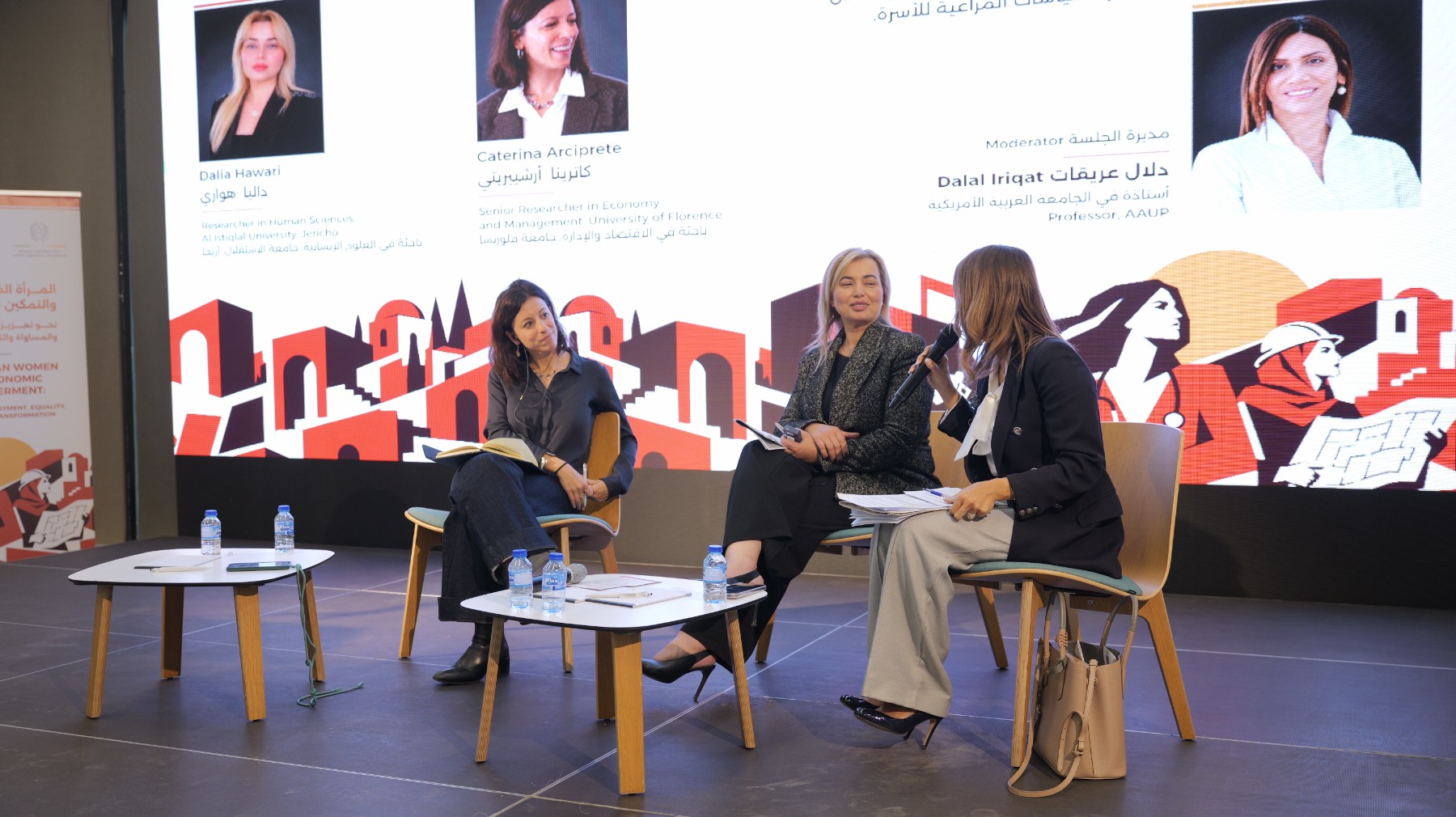
Access to decent work, shared care responsibilities and the fight against stereotypes at the heart of a dialogue bringing together Palestinian and Italian institutions, universities and civil society.
Ramallah, 18 November 2026 – Strengthening Palestinian women’s participation in the labour market while promoting equal opportunities and economic independence. This was the focus of the conference “Palestinian Women and Economic Empowerment: Advancing Employment, Equality, and Social Transformation”, organised by the AICS Jerusalem Office at the A.M. Qattan Foundation Cultural Centre.
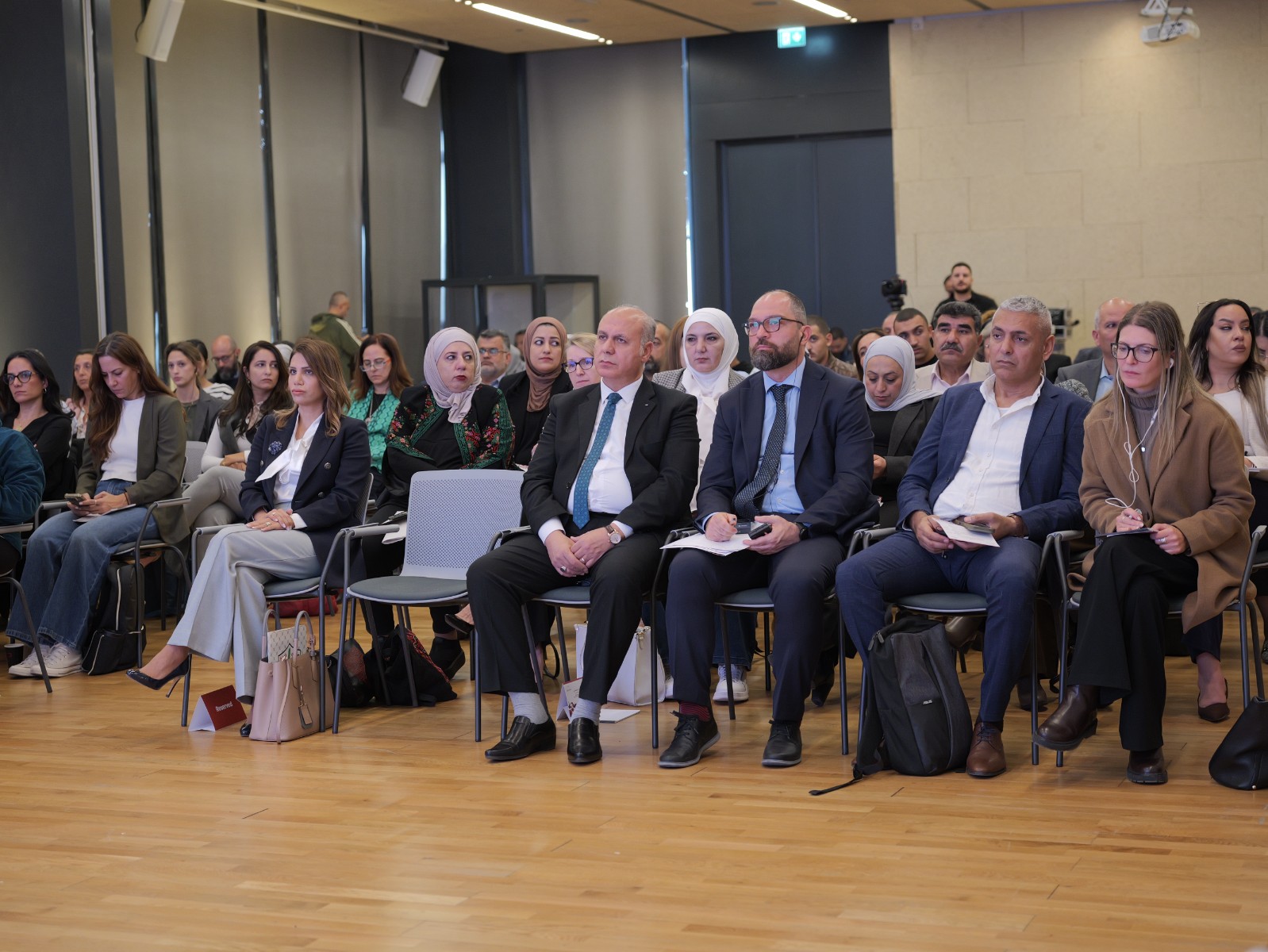
The event brought together representatives of Palestinian and Italian institutions and academia, civil society and international organisations to examine the economic, regulatory and social barriers that limit women’s employment and to identify possible shared responses.
In his remarks, Head of the AICS Jerusalem Office Mirko Tricoli stressed that women’s economic participation is not only a matter of equality, but also a driver of development, growth and resilience for Palestinian society as a whole. From this perspective, moving from principles to concrete measures is essential, while strengthening the link between education, employment and women’s participation in both the public and private sectors.
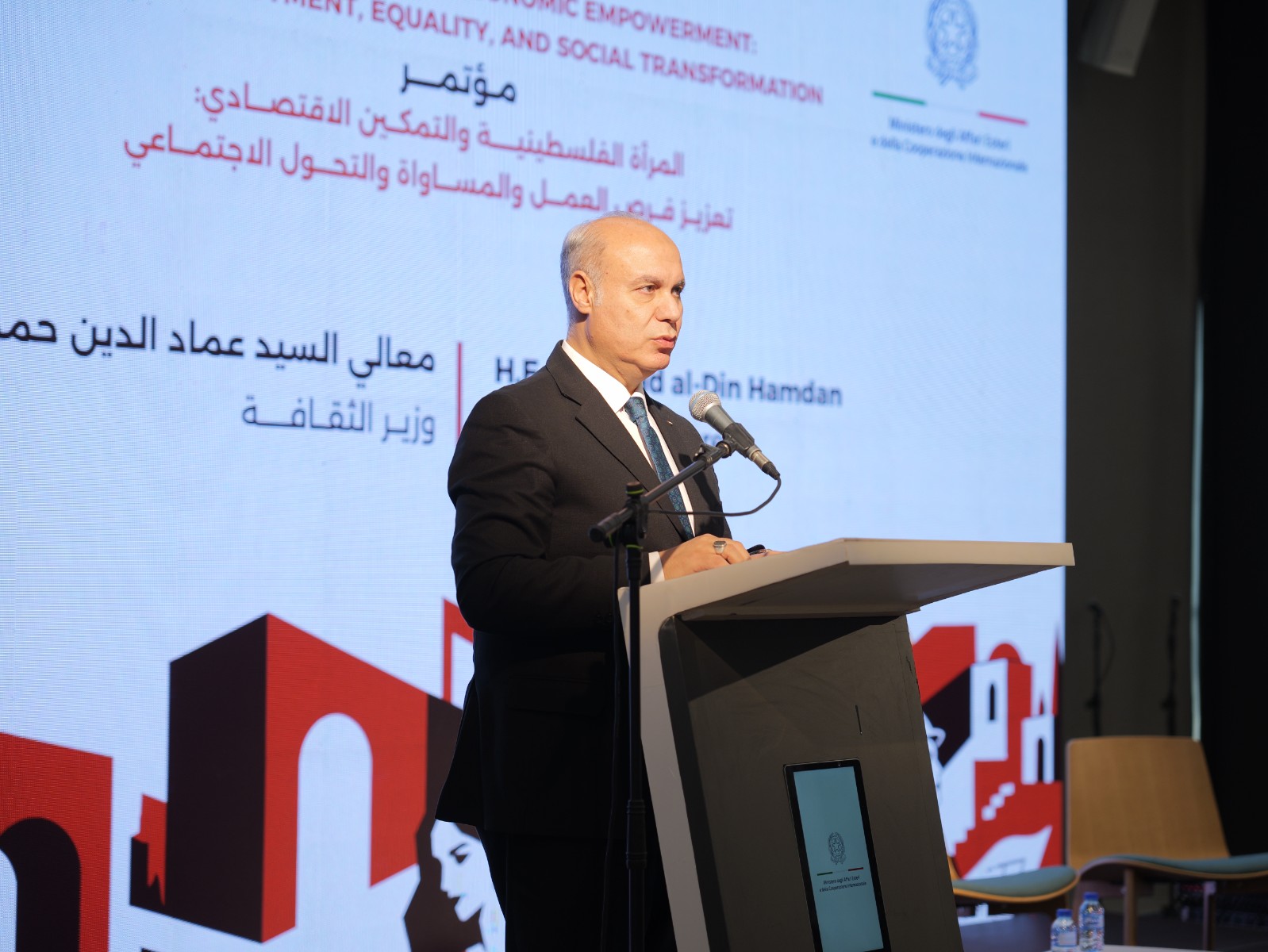
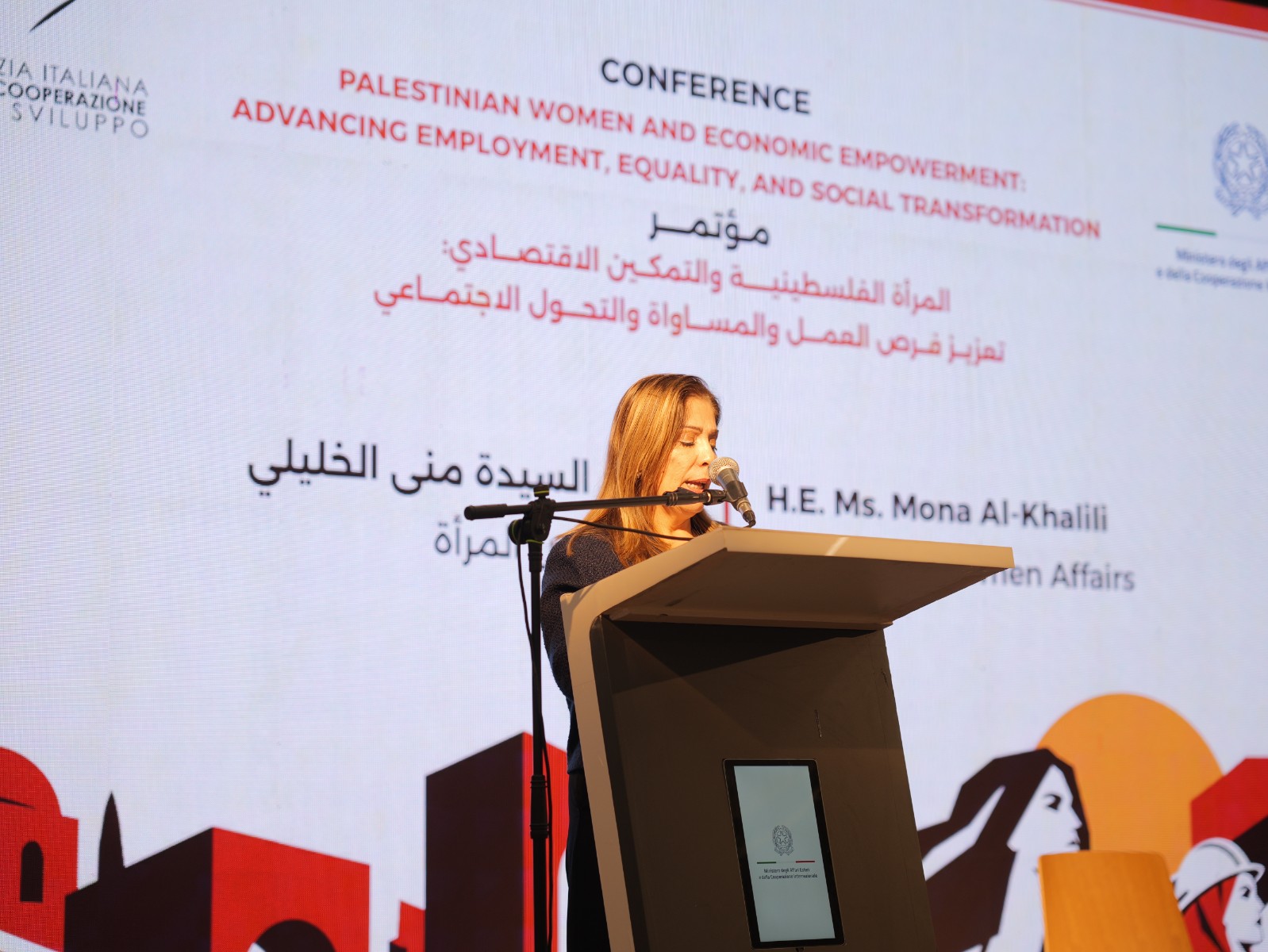
Minister of Women’s Affairs Mona Al-Khalili highlighted the impact of the occupation and mobility restrictions on access to markets and workplaces, stressing the need to ensure decent work, fair wages and care services. Minister of Culture Imad Al-Din Hamdan, meanwhile, emphasised women’s contribution to safeguarding Palestinian heritage and the economic opportunities offered by handicrafts, cultural industries and digital platforms.
Key priorities emerging from the discussion
The discussions highlighted the need for an integrated approach to women’s economic empowerment: strengthening labour protections, including for digital work; expanding access to skills and technologies; investing in care services and working arrangements compatible with family responsibilities; promoting women’s leadership; and engaging men and boys in advancing gender equality.
Other priorities identified included greater use of gender-disaggregated data and stronger coordination among institutions, universities, civil society, the private sector and development cooperation partners.
The proposals emerging from the discussion provide a basis for further reflection and for exploring possible future initiatives, without constituting resolutions formally adopted by the conference.
The overarching message of the event was the need to translate gender equality into concrete action, tailored to the Palestinian context and capable of supporting women’s economic independence, their participation in the labour market and, more broadly, the well-being of communities.